Read 03
How a movement ages
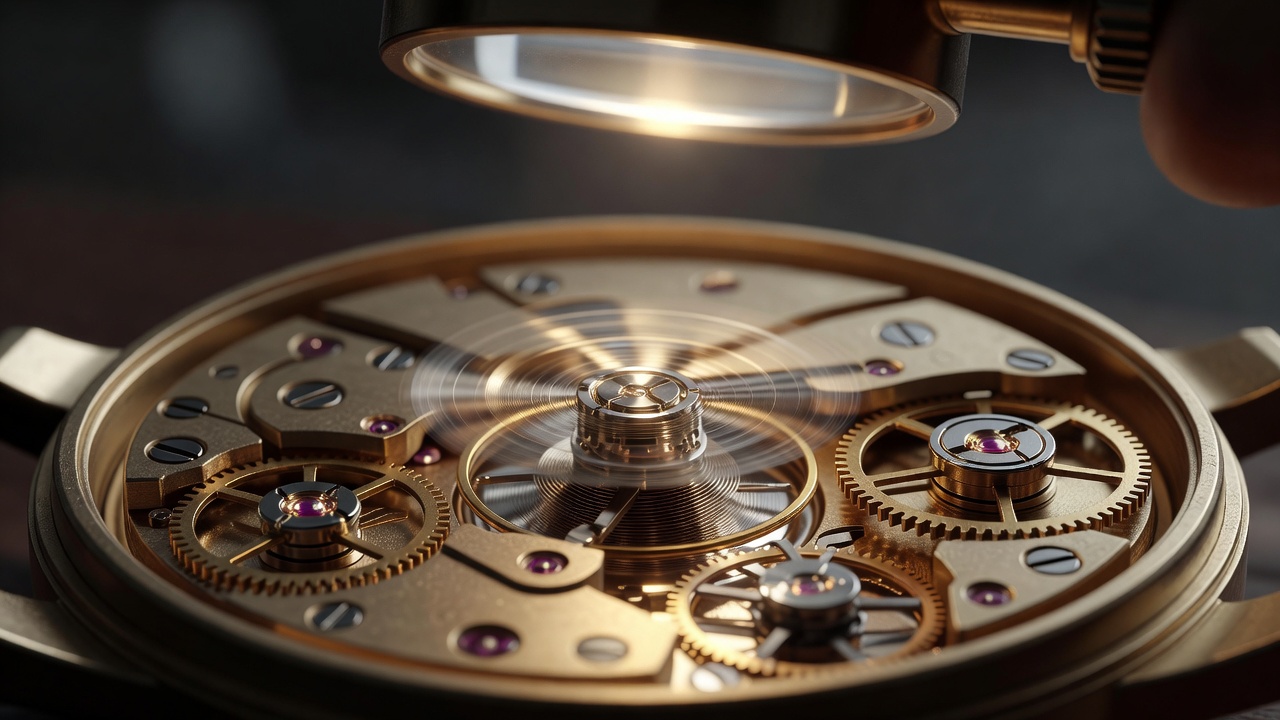
A mechanical movement is a small engine that runs without a pause, day and night, on a few drops of oil. Over years those lubricants thin, thicken or migrate away from the pivots they were meant to protect. Friction rises, amplitude falls, and the rate begins to wander. The watch may still tick, but each beat is costing it a little more metal.
This is why "run it until it stops" is poor advice. By the time a watch stops, dry parts may have been wearing against each other for some time, and worn pivots or jewels cost far more to put right than a routine service.
Service intervals
Figures of five to ten years are commonly quoted, and many makers publish their own guidance for each calibre. Newer oils and tighter tolerances can stretch that, while heavy daily wear can shorten it. Rather than following the calendar alone, watch for signs: a rate that drifts, a shorter power reserve, a gritty crown, a rotor that sounds rough.
Ask the watchmaker for timing results before and after the work. A timegrapher printout shows rate, amplitude and beat error in several positions, and it gives you a baseline to compare against at the next service.
Water resistance is a seal, not a promise
The depth printed on a dial describes a laboratory test on a new watch. Gaskets harden with age, and any time the case is opened they should be replaced and the case pressure-tested. If you swim or shower in a watch, have the seals checked at least once a year. Keep screw-down crowns fully screwed, and never press a pusher underwater unless the watch is designed for it.
Magnetism
Phone speakers, tablet covers, magnetic bag clasps and laptop speakers can magnetise the hairspring. The usual symptom is a sudden gain of a minute or more a day. The cure is quick: a watchmaker passes the watch through a demagnetiser, often in minutes. If your watch changes rate overnight, suspect magnetism before suspecting damage.
Choosing a watchmaker
You have two broad routes. A manufacturer's service centre will use original parts and follow factory procedure, though it may replace components a collector would prefer kept. An independent watchmaker may be gentler on originality and strong on vintage work. Look for training from a recognised programme such as WOSTEP in Switzerland or the British Horological Institute, and for a clear warranty on the work.
Before handing over a watch, ask three questions: Will replaced parts be returned to me? Will the dial, hands and case be left as they are unless I agree? What is the turnaround, and is it quoted in writing?
A service record is the most honest chapter in a watch's history.
Polish, patina and originality
Polishing removes metal. It softens the sharp bevels and engraved details that collectors prize, and it cannot be undone. Many serious buyers prefer an unpolished watch with honest wear over a glossy one with blurred edges. Likewise, a refinished dial or relumed hands can cut a vintage watch's value sharply, even when the work is skilful. Ask for replaced parts to be bagged and kept with the watch's papers.
Everyday habits
- Rotate watches rather than wearing one to exhaustion.
- Store them away from speakers, magnets and direct sunlight.
- Remove them for heavy impact sport and workshop tasks.
- Wipe leather straps dry and let them rest; replace them before they fray.
- Winders are optional for simple automatics. They are mainly a convenience for complicated watches such as perpetual calendars.
Next read: Reading a Hammer Price. Or see the short answer on service intervals.