Read 04
Two numbers, not one
The hammer price is the final bid, the figure at which the auctioneer's hammer falls. It is not what the buyer pays. On top of it come the buyer's premium, which houses set on a published sliding scale, and any applicable taxes and fees. The figure that appears in press reports is usually the total including premium, which is why the same sale can seem to carry two different prices.
Every house prints its premium schedule in the catalogue or on its website. Read it before the sale, not after. When you plan a budget, work backwards from your total ceiling to the hammer price you can afford, and then subtract again for shipping, insurance and any import charges.
Estimates and reserves
An estimate is a range, a specialist's informed opinion of where bidding might land. The reserve is a confidential minimum below which the lot will not sell, normally set at or below the low estimate. Lots offered without reserve go to the highest bid, however modest. Neither number is a promise: good lots exceed their high estimate regularly, and weak ones go unsold.
Reading a lot entry
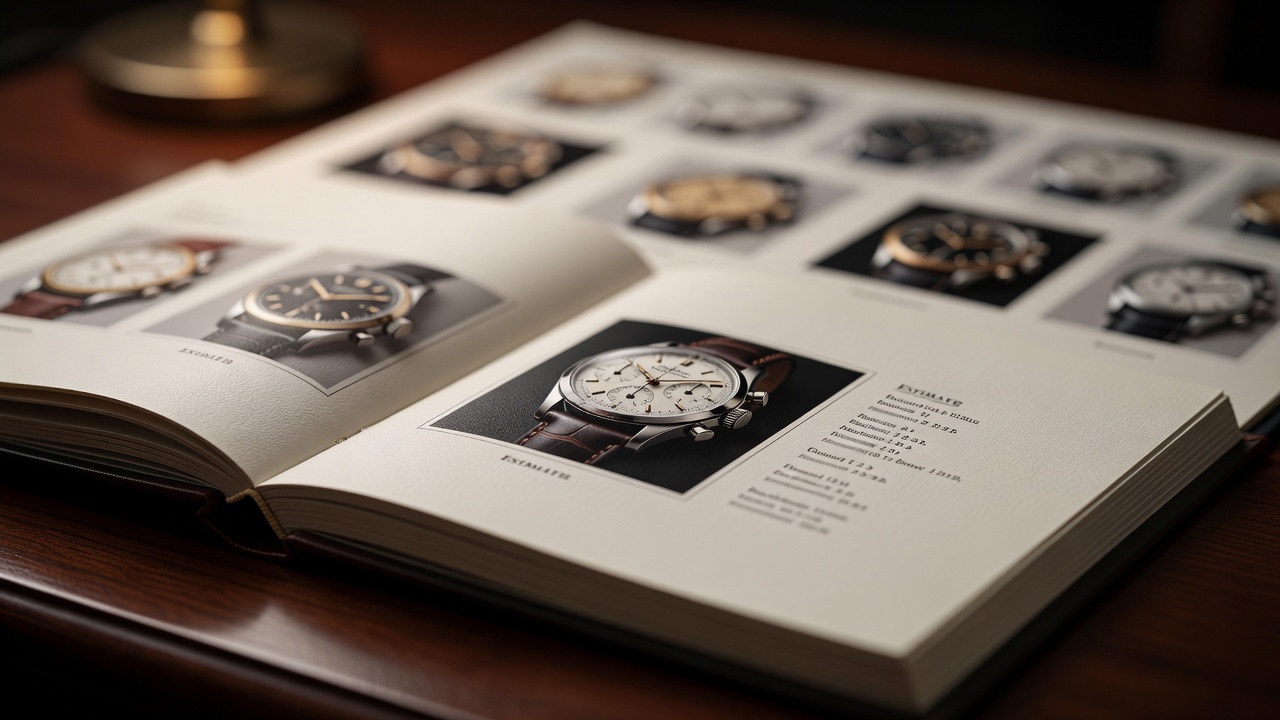
The lot essay and condition report repay close reading. Look for the movement and case numbers, whether the dial and hands are described as original, whether the watch is "fresh to market" (unseen by the trade for years), and what accompanies it. Phrases such as "light signs of wear" or "case with later polishing" are specialists' shorthand and carry real information.
Do not hesitate to ask for further photographs, a video or a condition discussion with the specialist. A preview, where you can hold the watch, is better still.
Landmark results, kept in proportion
A few sales shape the public picture of the market:
- The "Paul Newman" Rolex Daytona sold at Phillips in New York in 2017 for about US$17.8 million with premium.
- The Henry Graves Supercomplication, a Patek Philippe pocket watch, sold at Sotheby's in Geneva in 2014 for about US$24 million.
- The Patek Philippe Grandmaster Chime, made for the Only Watch charity auction, sold at Christie's in Geneva in 2019 for about CHF 31 million.
These are exceptional watches with exceptional stories. They describe the top edge of the market, not its middle. Most collectible watches change hands for far less, and quieter sales often teach more.
Decide your total, not your paddle number.
Fairs and auctions compared
Watches and Wonders, held each year in Geneva, is mainly where brands present new models to retailers and press. Collectors attend to see what is coming, and sometimes to meet makers. Auctions, by contrast, trade in pre-owned and vintage pieces, and specialist dealer fairs sit between the two. Each has its place. Auctions are open and competitive; a dealer relationship is slower but can be more personal, and often includes a return period.
Before you bid
- Set a total ceiling that includes premium, taxes, shipping and any service the watch will need.
- Register early and read the conditions of sale, including the return policy, which is usually narrow.
- Inspect the lot, or have someone you trust do it.
- Check import and export rules, particularly for watches with certain materials.
- Write down your limit and keep to it, however the room feels.
Next read: Collectors' Questions, Answered. Or see the short answer on hammer price.